Overview
00:01:00 Meet Clea Moore y’all!
00:01:33 Don’t forget the basics when maximizing for ROI
00:08:11 Use your data from ISPs and more
00:25:55 Don’t let Artificial Intelligence send email for you
[00:00:00] Eric Trinidad: Hi, everybody, and welcome to Email’s Not Dead.
My name is Eric, and with me, as always, is Jonathan JT Torres. What’s up, sir?
[00:00:06] Jonathan “JT” Torres: Well, I’m here. We made it.
[00:00:10] Eric Trinidad: Yeah. We made it. We did it again. We’re here with another episode jam-packed for you with all the email goodness that it is. We have a very special guest with us today, Clea Moore, the principal product manager at Yahoo.
Thank you for joining us today, and welcome.
[00:00:25] Clea Moore: Thank you for having me. I’m glad to be here.
[00:00:28] Eric Trinidad: Yeah.
[00:00:28] Clea Moore: To see you all.
[00:00:29] Eric Trinidad: Yeah, very great to be seen and also to see you as well. We wanted to talk about this report that came out, the email impact report, and wanted to see, like, how things have been going this year, what’s going on, what are your thoughts about it.
[00:00:43] Thomas “T-Bird” Knierien: We met Cleo last year at Inbox Expo. And we only got to talk to her
briefly, so it was like we gotta definitely have her to come back on the show and talk some stats that we found out this year, so.
[00:00:55] Clea Moore: Aw, love it. Yeah. Thank you. Yeah. It was great to meet you all.
[00:00:58] Eric Trinidad: Yeah, absolutely.
[00:00:59] Jonathan “JT” Torres: Same on this side. Yes.
[00:01:00] Eric Trinidad: So let’s kinda jump into this report. You know, I thought it was a lot of great information. Again, as always, some great stats and some great things that I think that JT and I think we talk a lot in the past with a bunch of our episodes regarding a lot of these topics, and it’s, I think, great to see what others are kind of, how they feel about sending email, what they’re doing, how they’re viewing their statistics, and how they’re getting a lot of their information back and utilizing it to, to get better results out of their emails.
So, it’s great to see it here. What did you think about the report and what it came up with?
[00:01:33] Clea Moore: Obviously it’s about, like, how you drive, right, more ROI from email. There’s already, like, a pretty high margin for email.
It’s generally a pretty affordable channel, which makes sense. So we always hear this number of, like, 40 to 1, but it was interesting to see some of the details in the report around it really depends on how you’re tracking you know, your user engagement, lifetime value, things like that how you’re targeting.
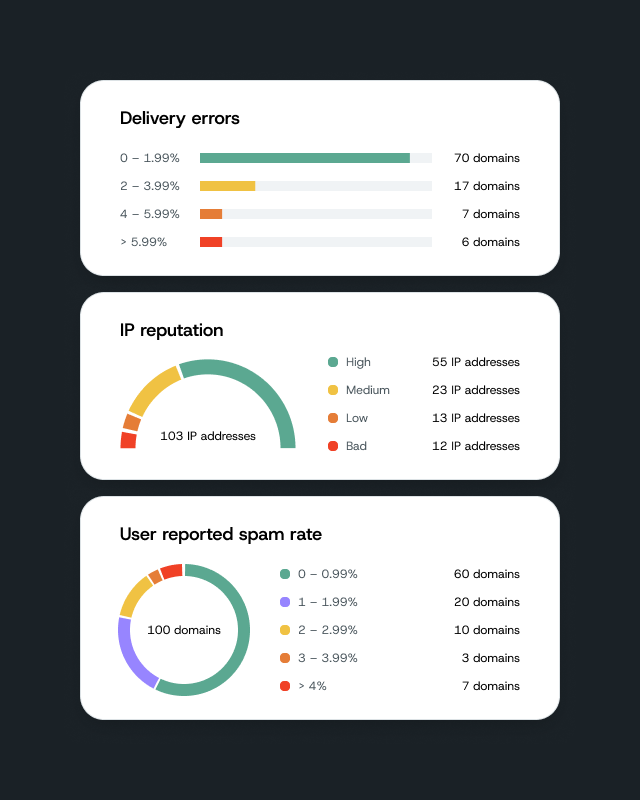
But from my perspective, you know, we know, we see that it’s a valuable channel but it’s, like, at the end of the day, I think it all starts from, like, the foundation of your email program. You want to get to this point of, like, maximizing ROI, but you have to start with the basics. And so it was interesting to see some of the stats in there, too, along those lines, like- List management related things like the sunset policy, you know, that’s a big like big piece of managing your customer life cycle and maximizing your ROI, and also managing your reputation, like from the mailbox provider side. So the fact that 47% of senders don’t use a sunset policy was like really shocking to me. Yeah, that’s just one of those foundational things, right? Like you’ve gotta just, you gotta do the basics. Now, some of the best practices that used to be recommendations are like requirements.
They’re must-haves, right? You got authentication, your spam rate, your unsubscribe links. You have to meet these bare minimum sort of requirements, and then there’s all these things that you tack on top of it in terms of really just sending mail that people want, to people who want it, and are engaging with it.
And more and more our systems are just honing in on that. Like, what is that? What is the critical thing that this user cares about? What, how can we help them take action more easily? And then that translates to like brand ROI if they’re doing the right things.
[00:03:25] Jonathan “JT” Torres: Yeah. I completely agree. And I think that’s kind of, one of the fun things about reports like this is, and obviously we have the one that we do, but I know there’s a lot of other companies that do the same thing.
They go out there and poll and see, you know, what everybody’s doing, and I really do like that. It kinda helps open up for a lot of the senders what they’re doing and how they’re doing it compared to other people. You don’t always get that. I know senders are always kind of cautious to do something different when they’re told to do something different.
That’s something that we’ve experienced a lot, like, and Eric knows. Eric’s been with me with those, like trying to tell people like, “Hey, don’t do this.” Like, and they’re like, “Everybody does it.” And you’re like, “No, everybody doesn’t do it.” At least not the people that are doing well don’t do this. Yeah.
So, I like that peek behind the curtain. I like the, you know, hey, here’s what happened. Here’s what everybody else did. Here’s where everybody stands.” And everybody kinda self-report and we get to see that, and I appreciate that about it. So, I don’t know. I kinda wanna dive in a little bit, I think and kinda chew this down a little bit by bit.
We’re not gonna go into every single detail, but we definitely wanna talk about some of that stuff. Eric anything in particular like ROI-wise that you’re seeing, like when people are reporting those numbers and back and forth, like that you caught, that caught your attention?
[00:04:30] Eric Trinidad: Yeah. You know, I guess the 40 to one, you know, was kinda crazy, but then it’s actually maybe, depending on your vertical, it could be 10 to one. But still, I mean, still 10 to one is also like a great thing to see, you know? Like anytime you’re putting i- like a little bit and you’re getting like a I almost said like Chingos amount of return on it.
A huge amount of return on it it’s always great to see. So, but then also I thought, like, Chad’s perspective on it when he was saying that if you’re getting like a six to one, maybe it’s too broad, maybe you need to hone it back down a little bit. I thought that was also good to see as well.
Interesting perspective on it. Yeah.
[00:05:05] Clea Moore: Yeah, that’s so true. There’s like a sweet spot, right? Of like are you too aggressive with how you’re targeting or not aggressive enough. Like how do you strike the right balance? And the data is really what you need to be able to figure that out, and it’s surprising how many people don’t leverage all the data that they have available.
[00:05:21] Jonathan “JT” Torres: And kinda going back to what you had mentioned, Clea, like, it’s a very much starting off in the right place, and I think the foundation of it is the key. And data, I love talking about data. I know I’ve said it way too much, and I know I always talk about it and mention it here, but like that foundational data, like using data in the right way to kinda drive the, what you’re doing within email, which is gonna drive that ROI number, and I know people really love to focus in on it, and it becomes the driver, ROI becomes the driver for everything that some senders are doing.
And I definitely believe that if you don’t have the other points of data, or you’re not using the other points of data that you have, like as far as, you know, who your customers are, the type of emails that you’re sending, the type of distribution that you’re doing with those emails like we always tell people, like you gotta pay attention to who’s actually coming back, who’s actually doing things within your platform, who are the people that are gonna want and engage and do things.
And I know the biggest thing that then becomes the opposite part of it is that you can sometimes drive these numbers even higher by not sending more email, by actually reducing your email. And that’s, I think, a thing that so many customers fear and so many senders are just so very afraid of.
And it’s not everybody, and I don’t wanna call out anybody. Yeah. But there’s certain marketing groups that love to just send out and, you know, they got an email, they got a contact, send it, talk to them, engage with them, like they’ll come around eventually, and I think that’s just so much the wrong approach.
And we have data. There’s numbers that show that there isn’t that, like from our side, so we wanna make sure that everybody’s using the data that they have to also do the same thing. And I know we kind of start going into other pieces of deliverability, which I’m sure we’ll kinda get to in the rest of this report, but I know I definitely wanted to say that about it because it definitely isn’t, and to call out one of the points that you made, ’cause it’s definitely important.
[00:07:07] Clea Moore: Your point about like senders who still are following that like spray and pray mentality, which is just like, it’s cheap, so just send as much as you can and see where it hits. Like that is gonna hurt you more and more as time goes on, right? It’s all about- user engagement.
[00:07:22] Jonathan “JT” Torres: Yeah, definitely. Eric was gonna say something. I was pausing for him.
[00:07:24] Eric Trinidad: I did want to, but then I was like, we’ve already said it three times already, and, you know, that’s usually just for the comic relief portion. I’ll leave it as is. I’ll leave it as is.
I appreciate you.
[00:07:32] Thomas “T-Bird” Knierien: You’re Mr. Enterprise, so we wanna know. Like- Yeah.
[00:07:35] Eric Trinidad: Well, yeah, actually, I just had this conversation actually just about, you know, following… There’s not, like, one silver bullet, right? There’s not one piece of data that’s gonna be like, “Okay, this is the reason why I don’t have engagement,” or, “This is the reason why, you know, my, like, messages are going to spam.”
Like, it’s like a whole host of thing, and it’s looking at all the data, and you have to use, like, all the tools at your disposal to really kinda hone in on that. You know, it’s not just a one-and-done situation. So, looking at all the metrics you got and you know, knowing how to utilize that and, you know, look at trends.
You know, it’s not just a one-day type of thing.
[00:08:11] Clea Moore: Yeah. Coming from, like, the deliverability side of things before my time here at Yahoo I have to say, like, I always looked at it with, like, my customers in this waterfall effect of first level of data is the platform level stuff coming from the ISPs, right?
Like, Yahoo’s giving you Sender Hub data, Google has their Postmaster Tools, Microsoft has S&DS. That is them directly telling you what they see. In addition to, like, the signals you’re getting back through your sending platform, your error messages, the complaints, the unsubscribes, that is also really critical.
And then, like, the third tier is you have these kind of, like, tools and services that you tack on top, right? Maybe you’re testing using a seed list to see what happens with inbox placement, which is kind of a limited view. So don’t just do that. Like, make sure you have the full picture. Yeah.
[00:09:01] Jonathan “JT” Torres: That’s a very good point. And I mean, I don’t know. I kinda wanna keep moving along. There’s a lot to talk about. There’s, it’s a big report. Yeah. I don’t wanna, like, just harp on this one piece, but I mean, it kinda leads into the next part, which is the benchmarking part of it because I know that’s some of the things that people will use when it comes to a mix of deliverability, a mix of, like, the benchmarking, what are people doing, how is email working for you, I guess, more than anything else, and working within your industry.
And I know that’s what people, like, kinda harp on is, like, that’s you know, people in my industry or… and even when it comes to the actual sending and what they wanna do, their practices, they wanna say, like, “Well, other people in my industry do it this way, and this is what has been the practice in our industry forever.”
I don’t even wanna get started with some of those and who they are, and they know who they are. But
[00:09:40] Eric Trinidad: Start calling them out.
[00:09:40] Jonathan “JT” Torres: We know who they are. No, I’m not gonna call out anybody. But, you know, it’s this belief that there is something there that, that has to be there for X, Y, and Z reason and we hear that all the time.
And I think when it comes to that piece of wanting to perform at your optimal, I think that’s kind of the comparison is, you know, what are you doing? Like how are you comparing to other people that are doing similar things or you expect them to be doing similar things?
And then you get things like those inbox placement tests and things like that, which again, a little bit more deliverability and kind of what’s happening within there. But it definitely informs, you know, how these industries are performing and who’s performing in that way.
I wanna start off by like addressing one of the, I think the main points, we’ve said it on the podcast plenty of times, but just as a reminder, delivery is not deliverability. It’s two separate things. I know that’s a big measurement. So we can measure delivery. There is a measurement for that.
There’s a number. We can see how many emails are going through. But where are those emails going? Like how are those emails being treated by any next part of the chain? Like that’s the big difference. So we wanna make sure that we identify that and talk about that as part of this as well, so we can measure and see the benchmarks for delivery, not deliverability.
But any insights that either one of you found that you found interesting on that part of it?
[00:10:53] Clea Moore: Yeah. I mean, I think that’s so true. That’s such a good point that like there’s this like gate of like first you gotta get in the door, make sure that’s working correctly. Then when that, once that happens, it opens like all these possibilities.
Where are you landing? How are people engaging with you? How are things getting surfaced within the UI? How is that evolving? What does that mean for your measurement of your ROI? I mean, that’s probably an impact. So having these benchmarks as a reference is so great because then you can really see like, is this trajectory normal?
Is it just me or is it everybody else too? So yeah.
And I think it definitely comes with the numbers right, whenever we start looking at those numbers, whenever we start looking at delivery rates, I know people wanna compare within industry, but like I appreciate those numbers. I know that they’re there for a reason, and people wanna see what’s going on with the type of emails that I’m sending compared to what everybody else is doing.
But you know, I completely agree with things that we see within the report. It’s not just about those numbers. Like those numbers are informative, but if it’s not paired with the right practices, with the right things that you’re doing with it, and paying attention to all the rest of the numbers, not just what is actually making it to a provider- That creates a much bigger impact.
That should be more impactful to what you’re seeing. So when it comes to, you know, bounce rates, when it comes to complaint rates, when it comes to, you know, what else are you doing down the line and those practices that you have, that should be much more important. So, you know, it’s not the end of the world if you’re not seeing a great rate, but it is a lot more impactful if you’re doing the wrong things
and not paying attention to the right numbers because that’s gonna continue to impact your delivery rate. And that is definitely one of those things where you need to start really checking yourself. You know. just like Ericstop checking on that beard, but I love it.
[00:12:31] Eric Trinidad: Yeah.
Thanks.
[00:12:33] Jonathan “JT” Torres: I had to call it out.
[00:12:34] Eric Trinidad: Yeah, no, I appreciate it. I think us being based in San Antonio, you know, kind of leads us more to understand, like, the fundamentals, following the fundamentals. We had the big fundamental, Tim Duncan, he was our bread and butter.
[00:12:45] Thomas “T-Bird” Knierien: Oh, are we really gonna turn this…
[00:12:47] Eric Trinidad: Yeah. For JT’s favorite team the San Antonio Spurs.
[00:12:52] Thomas “T-Bird” Knierien: Oh my God, just because it’s playoff time.
[00:12:58] Eric Trinidad: No, but it is following those, right? Like understanding, you know, knowing your audience, validating your list, easy unsubscribes, you know, following all that stuff, you know. Those all help, you know?
[00:13:07] Clea Moore: Yeah. And I think one of the biggest challenges and it was great that it was called out too in the report, is that, like, getting buy-in internally as a marketer is really hard sometimes, right?
So, like, to make these changes, it’s “We just wanna keep it as cheap as possible. Just do the, blast it. Like, we don’t care. Just keep doing what you’re doing,” you know, and cranking it out. But really, like, there is something to the nuance, and more and more so I think it’s important to focus.
So it’s so great to be able to see, okay, like, what’s the standard? Am I in line with that? Am I meeting these requirements? Am I following these best practices? Are our numbers looking like, you know, the benchmark numbers? Are we where we should be? And if not, it gives you that sort of ammo essentially to be able to say like, “Here’s the standard.
Here’s where we are. This is what it does for you,” right if you implement it. Yeah. Yes. Things like, it was kinda scary to see some of the metrics in there around, like, not using DMARC, like 61%. That’s not good, y’all. ‘Cause if you don’t set that policy, we will do it for you at this point.
Yeah, that’s something that is a must-have. If you wanna get in the door, that’s just a minimum. And also stuff like that is so important because it helps us identify and treat you appropriately, right? Like, we don’t wanna penalize brands. We want users to get the mail they signed up for and that they want, but if we can’t figure out who you are because you’re not authenticating or because some of your practices are a little suspect, then, you know, we can see you gaming the system
and it’s gonna be harmful. And then you lose out on even, like, reaching your audience, and then you don’t even get the feedback from them, right? But when you’re doing the right things, even then, it’s like, okay how are they engaging? Who’s opening? You know, how frequently am I sending? Who am I sending it to?
How targeted and relevant is this? Is it structured appropriately? That’s all the stuff that, like, our systems are designed to pick up and then do the magic with, right? Like, we’ve got this great UI for users to be able to consume this information more and more so we’re helping them surface what’s important to them.
So help us do that.
[00:15:14] Jonathan “JT” Torres: Yeah. It’s a great point because yeah it starts off with setting up yourself correctly as a sender, and then that sets you up for success, and I think that’s always a good call-out. And when it comes to deliverability, there’s a lot of stuff to dig into. I wanna kinda just emphasize that point of doing DMARC and setting up authentication correctly in general.
That’s a big one. We always wanna make sure that we have that in place. Please, everybody, set those things up. It’s one of those things that I think has still become a factor when people are doing this, is that people are still scared, and people are still afraid of like, “What is this going to do if I set this up incorrectly, don’t do everything that I possibly can to get it set up correctly?”
Or like, what kind of impact am I looking at? And I think that’s definitely the wrong mindset. Like, you need to think about like, “Let’s do this. Let’s figure it out.” There are some safeguards you know, but this is not a DMARC podcast. We’re not gonna spend the entire time. We have those.
Look up our history.
[00:16:08] Eric Trinidad: Not this episode. Yeah.
[00:16:08] Jonathan “JT” Torres: Yeah, we can even post links to other episodes where we talk about that, but it is something that you can do and you should do in order to get that you know, authentication correctly. I don’t wanna sell short the other pieces that kinda have made that and have been set up in place.
So yes, SPF, but so many people have SPF in place. DKIM, so many people have DKIM in place. So many platforms are already set up to help you do that from the very beginning without you really having to think about it too much. But that’s just the beginning, and you need to take that next step to make sure that you are doing at least that.
So just wanna call that out. Sorry, I took a big one off the board. Anybody else wanna call out anything?
[00:16:40] Clea Moore: I mean, I think if we’re talking user engagement, right? Like, so yeah, we’ve covered the basics of, like, meeting those requirements. But at the end of the day, right, like, if you are sending to a list full of disengaged subscribers, it’s not only gonna hurt your bottom line ’cause you’re spending all this money sending to them, but it’s gonna hurt your reputation.
So you gotta be careful. If you got a lot of inactive users in your account, you know, in your sending, if you, in your list, right, if you are continuously sending to users who’ve complained or unsubscribed, that’s a big no-no. We see all of this, right? So just making sure that you’re, again, respecting that relationship.
I think it’s, like, various stages, right? Like, you’ve got this permission, you’ve, like, started this relationship when you first get them on your list. You’re trying to start off on the right foot with a good welcome program and, like, you know, getting all the triggers going and keeping the relationship warm.
But you don’t wanna overdo it, right? Like, you can really, like, come on too strong. And that’s where people are like, “Ugh, how do I get rid of this?” And I will tell you that is, like, the number one user complaint that we see in our research is like, “Help me stop the noise.” “It is just too much.
I’m getting bombarded. I don’t need five emails a day from this brand. Oh my gosh.” Right? So it’s like-there’s a-
[00:17:52] Eric Trinidad: You got a stage five clinger. Yeah.
[00:17:54] Clea Moore: Yeah. A stage five clinger.
[00:17:55] Eric Trinidad: Yeah.
[00:17:55] Clea Moore: Absolutely. Yeah. Yeah. You don’t wanna be that person. Because we’re making it easier for users to take action, right?
Like, these bulk actions to just stop getting mail, like, whether or not you put unsubscribe, we’re giving them that capability to hide the mail that they don’t wanna see if you’re getting to be too much. So at the end of the day, like, just make sure you’re thinking about it in terms of who’s really wanting this mail and who’s engaging with it.
I think one I think I was just talking with one of my clients the other day about sunset policies, making sure, like, tightening those up and looking at their data, removing users that don’t exist, mailboxes that are disabled or full remove them.
Like, it’s been weeks.
[00:18:37] Thomas “T-Bird” Knierien: Say goodbye.
[00:18:37] Eric Trinidad: They’re not gonna come back, you know?
[00:18:38] Thomas “T-Bird” Knierien: It’s time to say goodbye.
[00:18:39] Eric Trinidad: Yeah. Yeah, you’re not sending as much, but you’re sending to a more specialized unit, people that are actually gonna open your messages. Like, why waste the money? thousands of messages getting wasted on people that don’t exist just because they might come back.
But over time, you know, they’re definitely not gonna reopen
[00:18:55] Thomas “T-Bird” Knierien: Marie Kondo those contacts. That recipient is not bringing you joy. Thank you. Yeah.
[00:19:03] Eric Trinidad: Oh, that’s good.
[00:19:03] Thomas “T-Bird” Knierien: Yeah. It’s time to decline.
[00:19:04] Clea Moore: Vice versa. Yeah. Yeah. So true. Yeah. Yeah. Yeah, that’s a really good point.
[00:19:09] Jonathan “JT” Torres: Kinda, you know, kind of ties it all in together because it, it is one of those things, we had that conversation leading up to this that users are the ones still in control. They’re still the one that are having to access that, that mailbox. They’re the ones that you’re having to talk to as part of your audience, and you really do need to respect them.
You know, like sunset policies, not doing too much easy unsubscribes, which you know, Eric already mentioned. And then when you look at, you know, platform-wise, like, you know, more and more each day, like we see it as, as evident as I think we’ve ever seen it, where the platform is trying to help the user do what they want to with their inbox.
I think that’s exactly what, you know, senders should be paying attention to, is that if your recipient doesn’t want your message, like then that’s not good. Thinking because like I think of examples like my wife and I’m sorry. If you ever listen to this, I’m sorry for calling you out.
But she just, like she gets so frustrated with emails coming through. I’m like, “Why are you signing up to these things?” And then, you know, three weeks later when they send her-
[00:20:06] Clea Moore: Gotta get the discount.
[00:20:07] Jonathan “JT” Torres: Like a dozen messages, yeah. And she’s like, and she’s like, “I just gotta go and delete them all.” I’m like, “Ugh, we need to unsubscribe.
Like, let’s clean things up. Like, let’s help you so they don’t feel inundated every day with a bunch of messages that you really didn’t care for.” And I think the other part of that we haven’t really touched on yet today, which we have in the past, getting users an option to decide how many messages they wanna do.
So like doing a preference center.
[00:20:29] Clea Moore: Yes.
[00:20:30] Jonathan “JT” Torres: Letting them say, “Hey, this is too much. I wanna hear from you. Let me hear from you once a month. Let me hear from you once a week.” I appreciate that. Thank you. The brand that I will call out, this is the one, I’m sorry if anybody gets offended by this, but Bath & Body Works, I really appreciate that I have the option to say I only want it once a week.
So-
[00:20:47] Eric Trinidad: Yeah …
[00:20:47] Jonathan “JT” Torres: thank you.
[00:20:48] Clea Moore: Love that.
[00:20:48] Jonathan “JT” Torres: It is definitely one of those things where it does help. And yeah, pay attention to what you’re doing. You know, look at what your base is telling you. Implement that preference center. That’s a hard thing to do. I’m not saying it’s easy.
It’s not simple. It can be made simple depending on the platform you’re sending from. It can be, you know, a little easier for some people who are a lot more technology savvy or already in that space. But if you don’t, like that’s something you really should look into, because I think that’s definitely the way of the future, when people get to decide more actively with you as the sender how much they wanna get.
[00:21:18] Clea Moore: So true. And also, you don’t need to wait for them to tell you. You can see the signals from them, right? Like if they’ve- Like tailed off in terms of their engagement, maybe don’t send them five a day. Maybe start to taper off in that sunset policy. It’s not just about like getting rid of people who are no longer engaging.
It’s like there’s this gradual tail of, okay, maybe we switch up the messaging. Maybe there’s a better deal. Maybe we stop sending them so many messages. This is really where I wanna see AI used on the sending side. We see so much about like optimizing subject lines and content and stuff- … but it’s like at the end of the day, like look at your segmentation and your frequency
on these things. Like this is where you should be leveraging it, you know, to really help you and help your audience.
[00:22:00] Eric Trinidad: Yeah. Right on. Have you done any testing with AI currently or have you dipped your hands in that at all,
[00:22:05] Clea Moore: I love this question because yeah, I mean, right, LLMs and AI have really been around for a long time.
Like in terms of spam filtering and classification, we’ve been using these systems for, you know, longer than the buzzwords have been around to help us classify wanted mail and unwanted mail. And so now, yeah, we just double down on it, right? The models are more and more exciting.
They’re able to do more. Obviously, that’s like the spam filtering side, and then as you’ve seen in the inboxes, like that’s continuously evolving. And yes, there’s a ton of AI features that we have. Like specifically, I think one of the biggest ones is just that like relevancy sorting, right, that we have for you.
We’ve got this tabbed inbox. We’re seeing like, how is this user engaging with mail? What do they find most important? Where should we be putting these messages? Like summarization to help you get the information you need right away without having to like read an essay. This is as a parent, I think one of the most important things when I think about email is like all of the school notifications and updates.
Oh my gosh. And I’m like, “Where do I need to be and when, and what do I need to bring?” You know? Just help me find that. So those like smart actions, create a calendar invite, save this to planner as a task, you know we’ve got all these great features to help you manage that. So yes, it’s definitely a heavy focus for us in a number of ways, and then internally in how we’re optimizing our own workflows, absolutely must have, yeah.
[00:23:29] Eric Trinidad: Right on. No, that just reminded me I have to go pick up somebody here this afternoon, so thanks for- … bringing that up.
[00:23:36] Clea Moore: I see you. Yeah.
[00:23:38] Thomas “T-Bird” Knierien: Just about to get a call. Come pick up your kid
[00:23:41] Eric Trinidad: She’s at dance practice today. It’s cool.
[00:23:48] Jonathan “JT” Torres: Love it. I feel, right now I feel like Independence Day, it’s like I’ve been saying this for years.
[00:23:53] Clea Moore: Yes.
[00:23:56] Jonathan “JT” Torres: Like, because it is, and we see it, and I think everybody’s, you know, if you’re in the industry and if you’re in the deliverability space, I think a lot of us talk about it in the same way, where we know that platforms have been doing this for a very long time, and that those AI models, LLM, any kind of like machine learning things have been going on to try to determine that one thing, is do people want the messages that you’re sending?
And it makes it hard to try to tell people over and over again. I know it’s like one of those things that it feels like you’re on repeat sometimes just saying like, “You’ve gotta respect that.” And I think, you know, that, that other piece that is the less automatic thing that you can do, you know, you can always read metrics and you can always, you know, find data and dig things out first, but the first thing you should do ever is get permission to send to those people.
Because that’s exactly what everybody’s looking for. That’s the data that we’re all trying to uncover on the back end, is does this person actually want this? Yes, no. How often and how frequently now is the next step to that. But like at first you’ve gotta say like, “Yes, this person does want my emails.”
I can have them on there.” Just because they purchased from you at one time doesn’t mean they wanna continue purchasing from you, you know? Like that’s definitely one of the big things that we always talk about, so confirmation. I’m just gonna say that.
[00:25:04] Eric Trinidad: Consent.
[00:25:04] Clea Moore: So true. Yes. In the vein of relationships, that is important.
[00:25:09] Jonathan “JT” Torres: Definitely.
[00:25:12] Clea Moore: Yes. Good point. Yeah, absolutely. I mean, yeah, like if I sign up to get that one-time deal, do I really want to get emails from you five times a day? Probably not. Like I might not be buying that same thing that frequently. But would I like to hear from you a couple times a year or like once a month?
Yeah, sure. You know? Yeah. I think it’s really important to have that nuance, yeah. Such a good call out. Yeah.
[00:25:33] Jonathan “JT” Torres: I just bought a car. Do I need to buy a car every week? No.
[00:25:36] Eric Trinidad: I was just about to say that. I still get calls. I still get calls.
[00:25:42] Thomas “T-Bird” Knierien: Tell you right now’s not a good time.
[00:25:44] Eric Trinidad: Four years.
[00:25:44] Jonathan “JT” Torres: There is a cadence, there is a time, you know? So it’s definitely something people need to pay attention to.
[00:25:49] Thomas “T-Bird” Knierien: You guys buying cars, I’m buying bikes right now.
[00:25:51] Jonathan “JT” Torres: It was an example. I didn’t actually buy a car.
[00:25:55] Thomas “T-Bird” Knierien: Oh, I know. But for real though, Clea, I am curious though because like, yeah, you were talking about like everyone’s talking about AI right now.
I was just at an email marketing conference, and everyone was talking about like utilizing it for subject lines. But it’s like, how can we use this and actually look at the data from the back end to actually utilize and help senders actually strategize? Like what should they be looking for and analyzing with their data with AI in that respective form, I guess you could say?
[00:26:23] Clea Moore: Yeah, I mean, I feel like, you know, the possibilities are endless, like so to speak, right? There’s like with what we have these days, the tools available I think especially focusing on like how can I hone in on hitting that sweet spot of like frequency, who’s engaging with what they’re buying, tying that into like purchase behavior, the whole looking at the whole like customer life cycle.
And now more than ever, it’s so easy. And same with like consuming and interpreting the data. You can just tie it all together so much easier than you could in the past, I think, and have more of like a bird’s eye view, directional data. You know, trending over time is super important, benchmarking how you’re doing compared to others.
And I think at the end of the day too, right, we know deliverability is like not just a science. There’s an art to it, and that’s still true even with these like, new functionalities, so you need to be able to trust the people that you’re like getting your information from, right? So there’s a lot of LinkedIn experts out there-
posting like the hot tips, but make sure you are reading like reputable sources, right? Like this podcast, like there are reputable blogs out there. We have our own blogs, our own support pages that tell you. It’s like not a secret sauce, like we have it like listed for you. So just make sure that you’re getting your information from the right sources.
[00:27:47] Thomas “T-Bird” Knierien: Thank you. I think that’s a good point because, and I’m happy to bring this up, especially on our podcast, but we are hearing a ton of people out in the email marketing world, the transactional email world as well, everyone’s like, how can we utilize AI in, in our email strategy and program?”
It keeps getting asked on both ends, from the deliverability side, from the email development side. Email development side’s using it to help and create, you know, their actual blueprint and actual code blueprint for their actual emails, you know, for example in either, you know, Parcel or Email on Acid or anything like that.
But people are trying to figure out how to analyze this data. You can’t have AI make the decisions for you for your inbox.
[00:28:26] Clea Moore: Please don’t.
[00:28:27] Thomas “T-Bird” Knierien: Yeah. It’s not gonna send the email for you. Like, please. And you can keep going to all these, you know, other sources on LinkedIn but there is no magic key. Please.
Right.
We have to because there is no magic formula. And it’s just what we’re seeing, unfortunately. So, sorry. Had to go on a little tangent there.
Totally
[00:28:47] Clea Moore: makes sense. Yes.
Exactly. Like, don’t buy the snake oil. It’s not like a one, one stop and then you’re done. Yeah, it’s so true. Yeah. And even with like any of your AI implementations, like- Have a human reviewing that stuff. Don’t set it and forget it. Keep revisiting it and fine-tuning it. Like, you know, it…
You gotta be careful. Yeah.
[00:29:06] Thomas “T-Bird” Knierien: I am sending my own campaigns again, and I made a mistake actually a few weeks ago, but it made for great engagement. People are like “You made a mistake here.” “Hey, come- … I see you caught something. Come to our webinar. Come hang out.” Like…
bad press is press..
[00:29:22] Eric Trinidad: Now he’s just dropping mistakes on purpose now- … just to see who catches what, you know?
[00:29:27] Thomas “T-Bird” Knierien: Exactly.
[00:29:27] Jonathan “JT” Torres: I think the, one of the important points there is that you can’t let the machine make the decision for you.
Like, don’t do that. Like, it’s just so bad. It’s so dangerous to do that. And then, yes, like you mentioned, it’s a, gotta have somebody reviewing it, you gotta revisit, and you gotta look at things. I think there’s a lot of data that can be I don’t wanna say hard to access, but, like, something that, that isn’t the easiest data to gather especially when it comes across some of these senders that have very long li- lifecycles for the thing that they’re selling and what they’re doing.
I used that car buying example you know, a little while ago because we know that’s a problematic market. Like, what do you do if you’re a car dealership that you want to engage an audience, you wanna make sure that, you know, they come back to you, so you do your best while you’re selling them a vehicle, but then, you know, two, three, four, five years pass and you wanna make sure that they remember that experience and they come back to you and do that?
And maybe you landed something that was very memorable at the time, but, like, how do you continue to get that engagement going through, throughout the same lifecycle? You know, I don’t wanna call this marketing, but it’s, I guess it is marketing really because you have also, like, dentists and you know, doctors that’s always, I think, a joke that happens, you know, the dentist sending you a happy birthday, because that’s the one time they have to be able to say like, “Hey, this is us. Remember that we’re here.” But it is a thing. And what performs well? Like, what is that data that you’re gathering from those type of engagements? What is actually working? What isn’t? And I think that’s a, that’s something that’s great for an AI model to, you know, you can build that to say, “Hey, what has worked in the past?
What are people actually engaging with?” “And when do we lose people, like, during this cycle?” Because that’s, again it’s not impossible. Somebody can build it manually. You can gather that data. You can pull on certain levers. But AI’s there to help out, I think, in those situations especially, where you can have a human looking at it and saying like, “Oh, great.
This is the data that we’re seeing. How do we build? Like, where do we go from here?” Test things out. Do, some more marketing like that, and then- Rerun it again, see what that engagement looks like. And I think there’s definitely opportunity in good ways, and there’s opportunity in bad ways.
And I think people try to go the easy way out. So don’t do that.
[00:31:24] Clea Moore: I feel like put yourself in your your subscriber’s shoes, right? Like, not just, like you said, don’t let AI make the decisions for you, but if you’re taking a look at this stuff as a subscriber yourself, what’s helpful? What’s interesting?
What’s engaging for you? And does it feel like permission was actually, like, given there and- or is there gonna be some confusion and spam vote rate la-later down the road? ‘Cause they’re like, “Wait a minute, I just bought something from them. I didn’t actually say I wanna hear from you all the time,” you know?
I think it’s just make sure you’re doing that gut check. It’s really important. Yeah.
[00:32:01] Thomas “T-Bird” Knierien: ‘Cause what was our number? 46% using double opt-in, 44% not using… double opt-in. Thank you to the 46% using double opt-in.
[00:32:10] Clea Moore: I would love to see, like, what the complaint rates and the unsub rates are for those two groups.
I’m gonna tell you that they’re probably higher for those that aren’t using double consent.
[00:32:20] Thomas “T-Bird” Knierien: Which I feel like leads to our last question and point for this whole podcast is, so is your email program working?
[00:32:29] Clea Moore: Yes.
[00:32:30] Jonathan “JT” Torres: Yeah. Who’s gonna keep an ear out to see how’s it going, what’s happening.
Yeah. I mean, I know it’s one of those things that, and I don’t wanna get into specific, you know, people that I’ve talked to in the past, but I know that there’s definitely examples out there of people who we show them the data, we show them the information, and then some people are great about listening, and those people that do listen, we do see positive results.
Yeah. And I know sometimes it is a little painful, especially when we’re saying, “This is a dead segment. Don’t do this anymore.” Like, they really don’t wanna hear from you, and there’s always things that we can do. We’re not saying drop them forever. We’re saying, like, really think about how you’re gonna engage this part of your audience.
If they really do wanna hear from you, give them an option for an easy opt-out. Like, remind them, you know, once you get that chance to say, like, “Hey, haven’t heard from you in a while. We’re not gonna send to you anymore unless you click on this email,” some of them will click, some of them will come back.
Sometimes it’s a matter of, you know, kind of fixing other parts of the problem and then seeing, you know, if they do wanna engage then after that. Other times, you know, this is one of my big pet peeves, If you’re not getting to a recipient because they have a full mailbox, chances are they’re either really bad at email or they’re using a junk mailbox, and you’re never gonna get through to that person ever because they really don’t wanna check anything from anybody, so they threw you in the junk folder.
That person gave you a fake number. They don’t wanna hear from you.
[00:33:49] Clea Moore: That’s right.
[00:33:50] Jonathan “JT” Torres: Exactly
[00:33:51] Eric Trinidad: And you can’t keep calling.
[00:33:52] Thomas “T-Bird” Knierien: You can’t keep calling.
[00:33:55] Clea Moore: Or you can, but it’s not reaching anybody. You’re getting that recording.”
[00:34:00] Jonathan “JT” Torres: Yeah. Yes.
Oh, yeah.
But yeah, and that’s it. You gotta pay attention to those things. And you know, if you get people that are consultants to help you out with it, great.
Like, I know that’s where I come from, that’s where a lot of us come from on deliverability side. Helping coach through that. Listen, we ask you to please listen and if you don’t, like, it, we have seen that happen. We’ve had people that we give the advice to, we lay it out for them in a really nice and concise way, and we show them examples, and then they’re still like, “Can’t do it.
Won’t do it. Not gonna happen.” And then you end up in the same exact sending scenario that you’ve been in for the past however many years you’ve been doing it, you know? Or even worse, because things change around you in the actual email industry. So we don’t wanna see that. We wanna help you.
We wanna see people do good things in email, like we believe in it. That’s why we call ourselves Email’s Not Dead. Like, it’s gonna continue on, but you gotta do the right thing to help it continue on.
[00:34:52] Clea Moore: So true. I love the analogy of, like, thinking of your email program like your personal health, right?
Like, the deliverability experts, those are your doctors. They’re prescribing recommended programs and medicines to you. You can choose to take that advice, and hopefully you do, and if you do, you reduce your risk of having problems, right? But if you choose not to, your risk increases of having problems.
You know, it’s really in your hands. But, like, follow the good advice.
I’m gonna go change
[00:35:22] Jonathan “JT” Torres: my title in Slack right now.
[00:35:24] Thomas “T-Bird” Knierien: Deliverability doctors trademarked.
[00:35:25] Clea Moore: Doctor. Doctor Torres.
[00:35:28] Eric Trinidad: Nice. Nice. Well, right on. Clea thank you so much. We are coming up to time here.
I wanna be respectful of your time, so I do appreciate you coming on today. If you have places where people can reach out to you, get in touch with you, or if you got anything coming up where can people find you and find the great things that you’re doing?
[00:35:43] Clea Moore: Yeah. Thank you. Yeah, definitely follow on LinkedIn, Clea Moore.
We have our sender hub with all the great information for you at Yahoo. We have a blog there, too to keep you posted on all the latest and greatest features that we’re rolling out. And I’ll be out and about in the industry always. Feel free to reach out, and look forward to chatting with you.
[00:36:03] Eric Trinidad: Right on. Right on. Great. Hopefully we’ll get to see you out there sometime soon. And Thomas, where… If people wanna find stuff that we’re doing, where can they find us?
[00:36:10] Thomas “T-Bird” Knierien: Yeah. You can find everything that we got going on over at mailgun.com/resources/podcast and also over at youtube.com/@mailgun, and you can watch this podcast, and you can watch and listen to this podcast anywhere you listen to our podcast, a lot of fun stuff.
And yeah, we wanna give a massive thank you to Clea Moore and Yahoo for hanging out with us, and it’s always just an amazing time, so we appreciate it.
[00:36:36] Clea Moore: Thanks for having me. Super fun. Yeah. Love talking email with y’all.
Yeah.
[00:36:39] Eric Trinidad: Yeah. Great. Hopefully we get to do it again soon.