Deliverability
Cold, dry, global January: The data cleanse

A New Year’s Resolution for Marketers Who Swear They “Don’t Have a Problem”
If you had told 21-year-old me I’d spend my middle-aged winter breaks arguing on the internet about the ethics of data brokering instead of, say, having hobbies, sleeping, or making increasingly weird cookies, I would’ve laughed until I coughed on my Sparks (it’s energy! It’s alcohol! It’s DISGUSTING). Yet here we are, another holiday season, another digital shouting match about who gets to call whom “unethical” for sending email to people who did not ask for it.
Some folks in the email community (correctly, if not entirely helpfully) pointed out that many of our own employers dabble in the very practices we shame other senders for. And listen… I get it. It’s awkward to condemn cold outreach when you know there’s a perfectly good corporate brochure somewhere bragging about your company’s “market intelligence tools.”
But my stance — way up here on this high horse— is simple:
If your business model depends on purchased or scraped data to be viable, maybe the business model deserves to perish.
On the flip side, if you can retrain your organization away from unsolicited outreach and toward sustainable, consent-based practices? Congratulations. You’re already doing Deliverability Dry January. (We have weird cookies. And badges!) This is the energy we’re bringing into 2026:
Cold Dry Global January (the grownup alternative to a Wet Hot American Summer)
It’s the corporate cleanse no one asked for, but everyone desperately needs. Welcome to the intervention. From rock bottom, you can only go up!
“I Don’t Have a Problem, I Can Quit Anytime.”
Cold outreach culture has the same energy as drinking culture:
- The denial.
- The rationalizations.
- The delusion of control.
- And the absolute refusal to acknowledge the consequences until the consequences are, frankly, insurmountable.
These are the not-problems your SDR program has been clinging to — and what they actually mean.
“Our cold email is extremely well-targeted.”
Translation:
“I only drink on weekends.”
Reality Check:
If the recipient reports it as spam, it wasn’t targeted.
You can have the tightest ICP in the world, but if they didn’t consent, it’s a cold call in a digital disguise.
Cold outreach defenders love to argue “but it’s relevant!” as if relevance to their business needs magically creates user permission.
Spoiler:
It doesn’t.
If it did, I could walk into your house uninvited because I relevant-ly brought a lasagna (your favorite).
“But this content is genuinely valuable!”
Translation:
“I only drink good wine; this is classy!”
Reality Check:
If it’s so valuable, why don’t you let people sign up for it voluntarily?
If you genuinely believe your content solves real problems, you shouldn’t need to sneak it into strangers’ inboxes hoping they mistake it for something they subscribed to.
When you cold email someone, what you’re demonstrating is:
“I do not trust my content to attract subscribers on its own.”
“Everyone in B2B does this.”
Translation:
“This is just how my friends blow off steam! It’s totally normal and very under control.”
Reality Check:
The fact that everyone is doing the wrong thing doesn’t make it less wrong; it makes the ecosystem more fragile.
Cold email is a tragedy-of-the-commons problem:
Every sender thinks they’re the exception, and collectively they degrade the entire channel.
“We bought the data legally.”
Translation:
“Relax, it’s doctor-approved — totally fine in moderation.”
Reality Check:
Tacit approval from one source doesn’t mean it’s a good idea universally. Cold email is legal, but it’s still intrusive, still non-consensual, and still harmful to reputation.
Mailbox providers don’t care that you bought your list from “GrowthLead.io.biz.betterdata.pro” and the privacy policy says it’s legit.
They only care whether the recipient wanted the email.
Bonus: legitimately purchased ≠ ethically usable ≠ deliverable.
This is the triple-threat nobody wants to talk about, but I will never shut up about.
“Cold email works for us. We got three leads.”
Translation:
“I’m not as smooth at parties without a little liquid courage. It just helps me be funnier!”
Reality Check:
Cold email “works” until it doesn’t. Then you’re left with short-term spikes, and long-term damage.
Even if you eke out some leads, you lose:
- future domain reputation
- inbox placement
- brand credibility
- and every future campaign that rides on your now-poisoned domain
Congratulations on your three leads. Sorry about your three months of Microsoft throttling.
“The SDR team needs volume to hit quota.”
Translation:
“I just need one more! After this, I’m done.”
Reality Check:
Doing something sketchy because you feel you have to isn’t a hack, it’s a habit. And habits escalate. One cold email today becomes three next week just to get by. Volume compounds harm. Outreach sequences become complaint farms. Domain reputation slides from “neutral” to “non‑deliverable.” And suddenly you’re explaining to leadership why Gmail thinks your “just one more” SDR program is actually a spammer.
If any of these hit a little too close to home, you’re in the right place.
WELCOME TO COLD DRY GLOBAL JANUARY
A 30-day cleanse for your domain reputation. A reset button for your SDR program. A way to begin 2026 without tripping over your own cold outreach hangover.
- No unsolicited outreach.
- No purchased lists.
- No scraped leads.
- No relevance-cosplaying as consent.
- No “just one sequence” exceptions.
Just one month. 30 days of consent-based messaging. If you hate it, you can go back to spraying-and-praying strangers in February.
But you won’t want to.
Because after 30 days of genuine, consent-led engagement?
You’ll be able to see clearly:
- complaint rates calm down
- ESP health scores recover
- Microsoft stops throwing blocks like they’re last week’s confetti
- inbound quality improves
- actual relationships form
- and nobody screams at you in Slack
It’s almost like… consent works.
THE PLEDGE
Dry January (No Cold Email)
A Commitment to a Cleaner, Healthier Inbox for all in 2026
I solemnly swear to:
- Stop sending unsolicited outreach disguised as “targeted outreach.”
- Build my lists through consent, not convenience.
- Treat the inbox as private property, not public infrastructure.
- Eliminate purchased and scraped data from my marketing diet.
- Measure success by meaningful engagement, not vanity metrics.
- Respect complaint rates as the carbon monoxide detectors they are.
- Offer exclusivity, relevance, and dignity to my subscribers.
- Influence my organization toward healthier habits even when it’s culturally inconvenient.
Because a healthy inbox is good for my brand, my reputation, and the internet. Cold Dry Global January starts now.
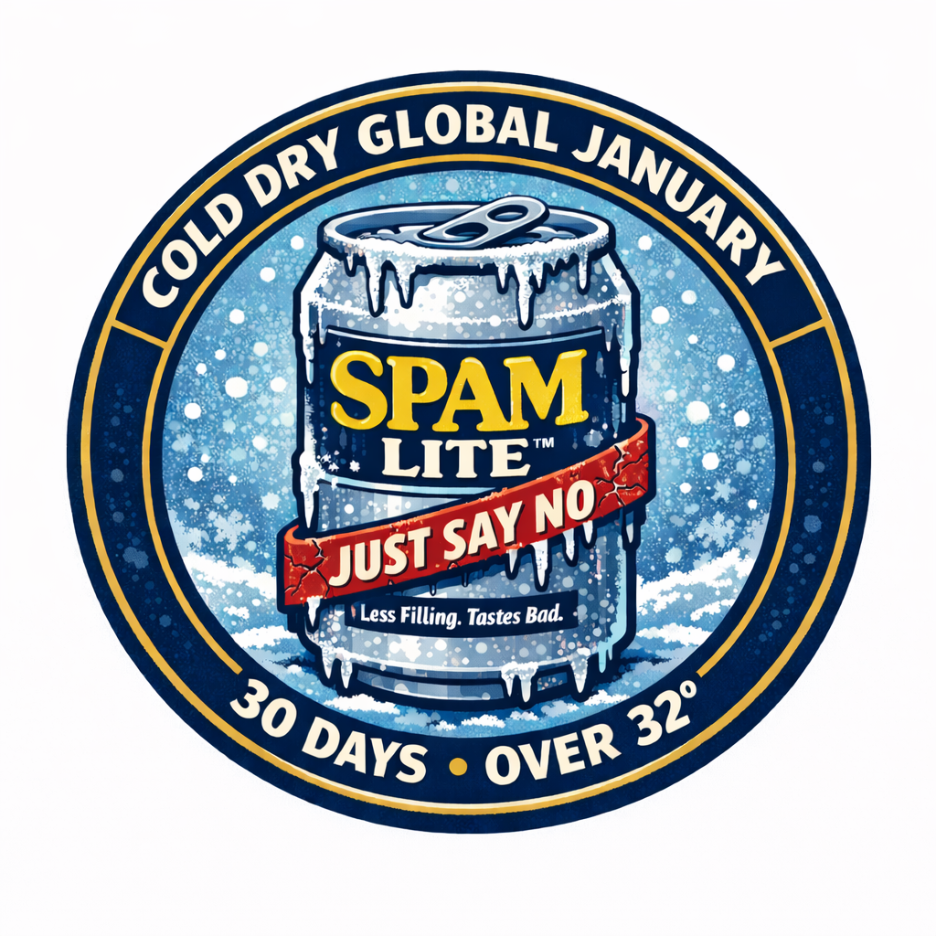
If you commit to all 30 days and succeed, you win this collectors’ badge. Cookies not included.