Not sure if you should choose Elastic Email or Mailgun? Mailgun powers transactional email with advanced deliverability, logs, and APIs. Elastic Email offers affordable, all-in-one marketing features.
Why Sinch Mailgun?
Both platforms serve different needs—Mailgun for robust, developer-first transactional email, and Elastic Email for cost-effective marketing.
Top reasons businesses choose Mailgun:
Reliable, high-volume transactional or notification delivery
API-first integration, robust logs, and deliverability diagnostics
Enterprise features: SAML SSO, RBAC, dedicated IPs, compliance controls
Deliverability
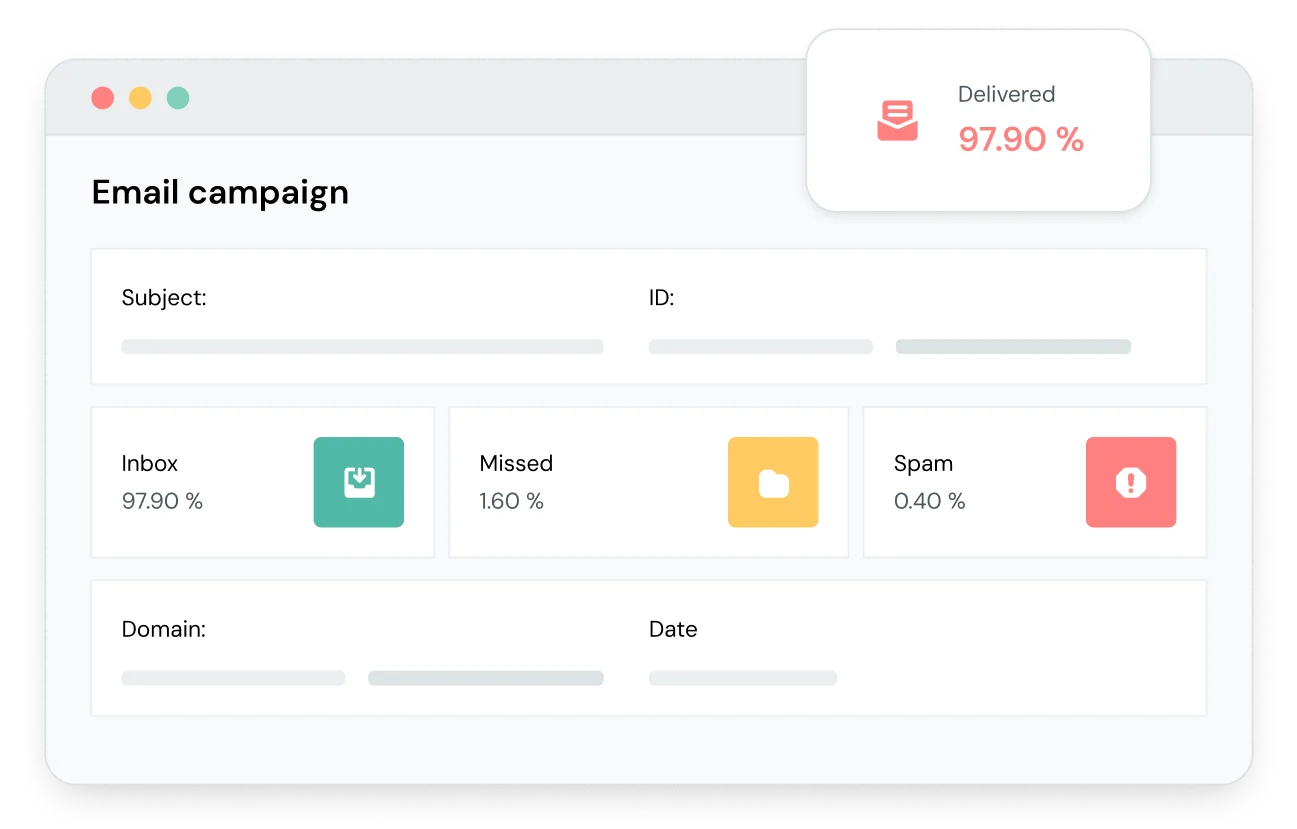
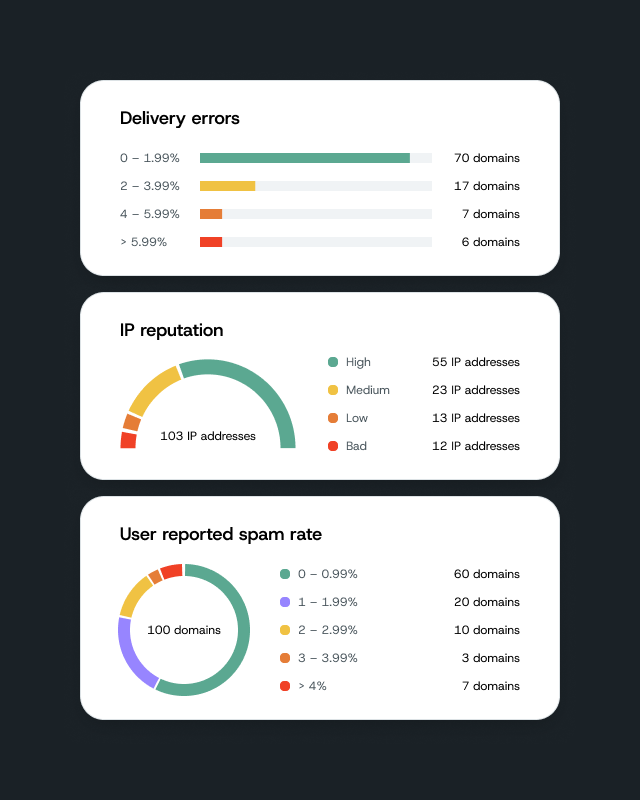
Mailgun is the first line of defense for your deliverability, providing essential diagnostics for high-stakes sending. Use inbox placement testing, spam-trap and blocklist monitoring, plus Google Postmaster/SNDS integrations to anticipate performance before every send to reduce risk and improve inbox rates.
Improve inbox placement with seed testing and blocklist monitoring
Reduce risk with actionable diagnostics before every send
Integrate with Google Postmaster to improve performance
More Control and Flexibility
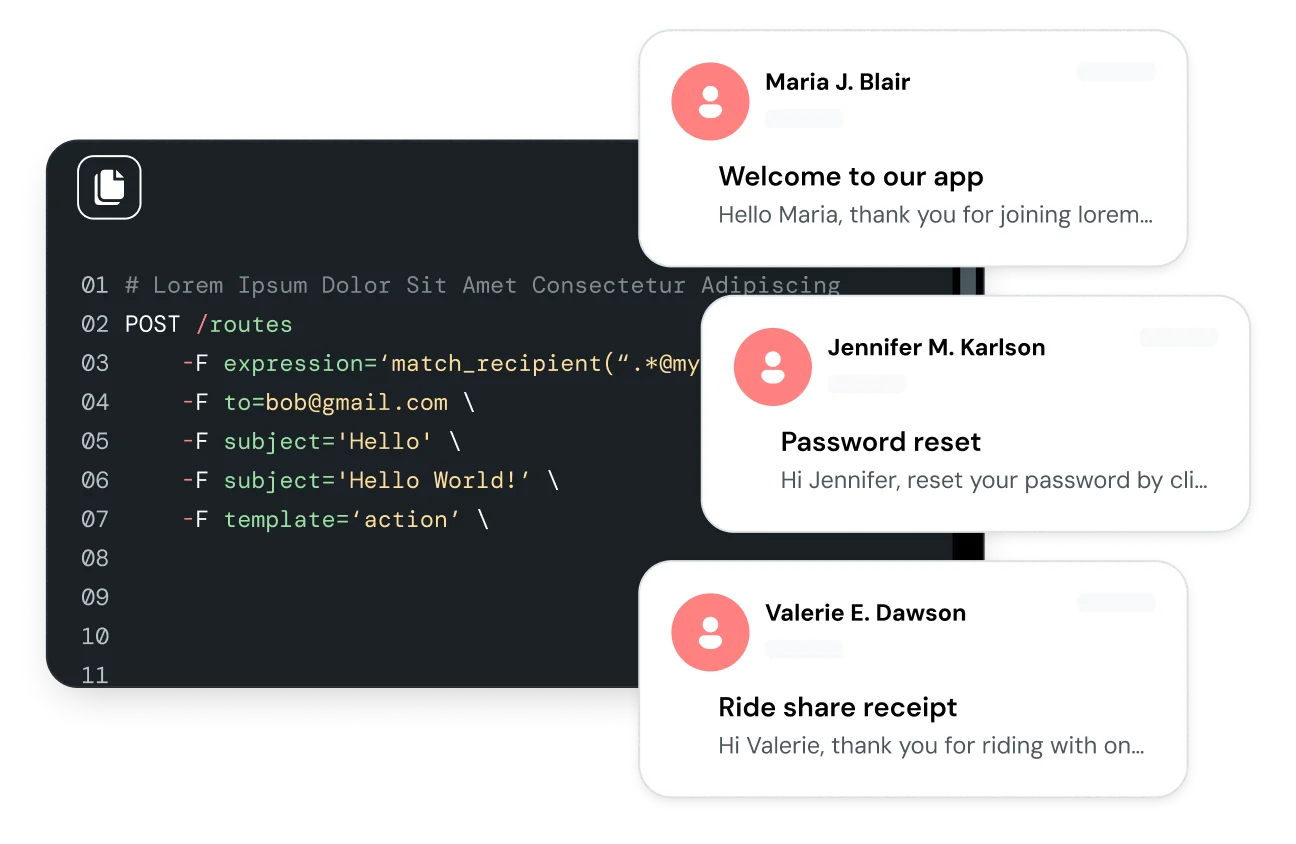
Built by developers for developers, Mailgun offers a robust HTTP API, SMTP, and clear documentation for reliability at scale. Inbound routing parses emails to structured JSON for simple automation.
Automate workflows with JSON parsing and event APIs
Integrate using robust HTTP API and SDKs
Scale reliably with strong documentation and support
Observability
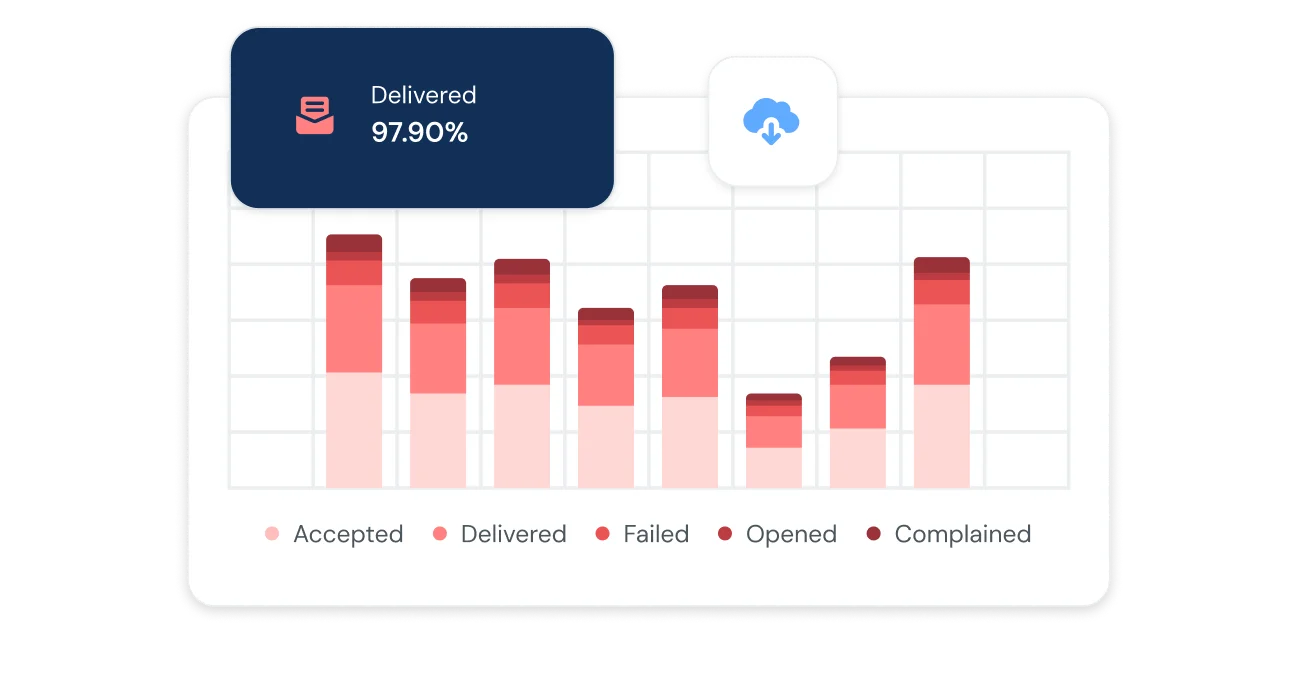
Mailgun’s 30-day log retention, advanced analytics, and CSV export give you quick diagnosis and resolution of deliverability issues, minimizing downtime.
Troubleshoot fast with 30-day searchable logs
Export and analyze granular analytics for insights
Minimize downtime by identifying and fixing issues proactively
Compare features
See how Mailgun and Elastic Email stack up across key capabilities. Mailgun delivers enterprise-grade reliability, diagnostics, and integration—ideal for transactional emails and technical use cases.
Product Reviews & Ratings
Mailgun on G2
Elastic Email on G2
Mailgun on Capterra
Elastic Email on Capterra
For us, at the volume we’re sending – every fraction of a percentage means a potential customer, and as a community of designers, it’s our job to create meaningful touchpoints. High deliverability ensures that our messages and our reach are seen; any improvement in our email program has a huge effect on our business.
Mailgun has great ability in email delivery. It’s also really reliable as I have not heard my website users complaining about not receiving emails. The sort of new intuitive design makes me like Mailgun even more!
Results
Mailgun delivers reliable, measurable outcomes for technical teams who need results they can trust.
Average delivery rate for Mailgun customers
Outperforming 85% industry average
Bounce rate
Well below the 2% industry average
Pricing
Mailgun offers straightforward, volume-based pricing with no hidden fees or contact limits. Start with a generous free tier—100 emails/day—then scale up as you grow. Features like 30-day logs, SAML SSO, and advanced analytics set Mailgun apart from Elastic Email, making it a smarter choice for teams who need reliability and transparency.
FAQS
Find quick answers to the most common questions teams have when comparing Mailgun and Elastic Email.
Mailgun offers advanced deliverability diagnostics, 30-day logs, and robust APIs suited for transactional and notification use cases.
Both Mailgun and Elastic Email offer free plans with 100 emails/day to help teams get started. Elastic Email generally provides lower-cost plans, especially for basic marketing emails. Mailgun’s pricing is higher, reflecting advanced features such as 30-day log retention, robust deliverability tools, dedicated IPs, and enterprise-grade security—offering greater reliability, visibility, and developer-first control for teams that need it.
Mailgun retains logs up to 30 days on the Scale plan. Elastic Email typically retains logs for 3–7 days, depending on plan.
Yes. Mailgun parses inbound emails to structured JSON, supports attachments, and exposes detailed event telemetry.
Both offer dedicated IPs. Mailgun includes automatic warmup; Elastic Email offers dedicated IPs, with auto-warmup not specified.
Mailgun provides a free tier (100 emails/day). Elastic Email’s free options vary by plan; check current offer details.
Migration is easy. Set up Mailgun domains, DNS, and authentication, map API endpoints and webhooks, import templates, warm new IPs if needed, and gradually cut over your traffic.
Experience the difference of developer-first, reliable email delivery.
More than just sending email
Email deliverability services
Email deliverability experts
Blocklist monitoring service
Ensure every email hits the inbox
Email deliverability
Email list management
Email analytics
Read how other companies are using Mailgun
Email testing tool
Check sender reputation
Email reputation check